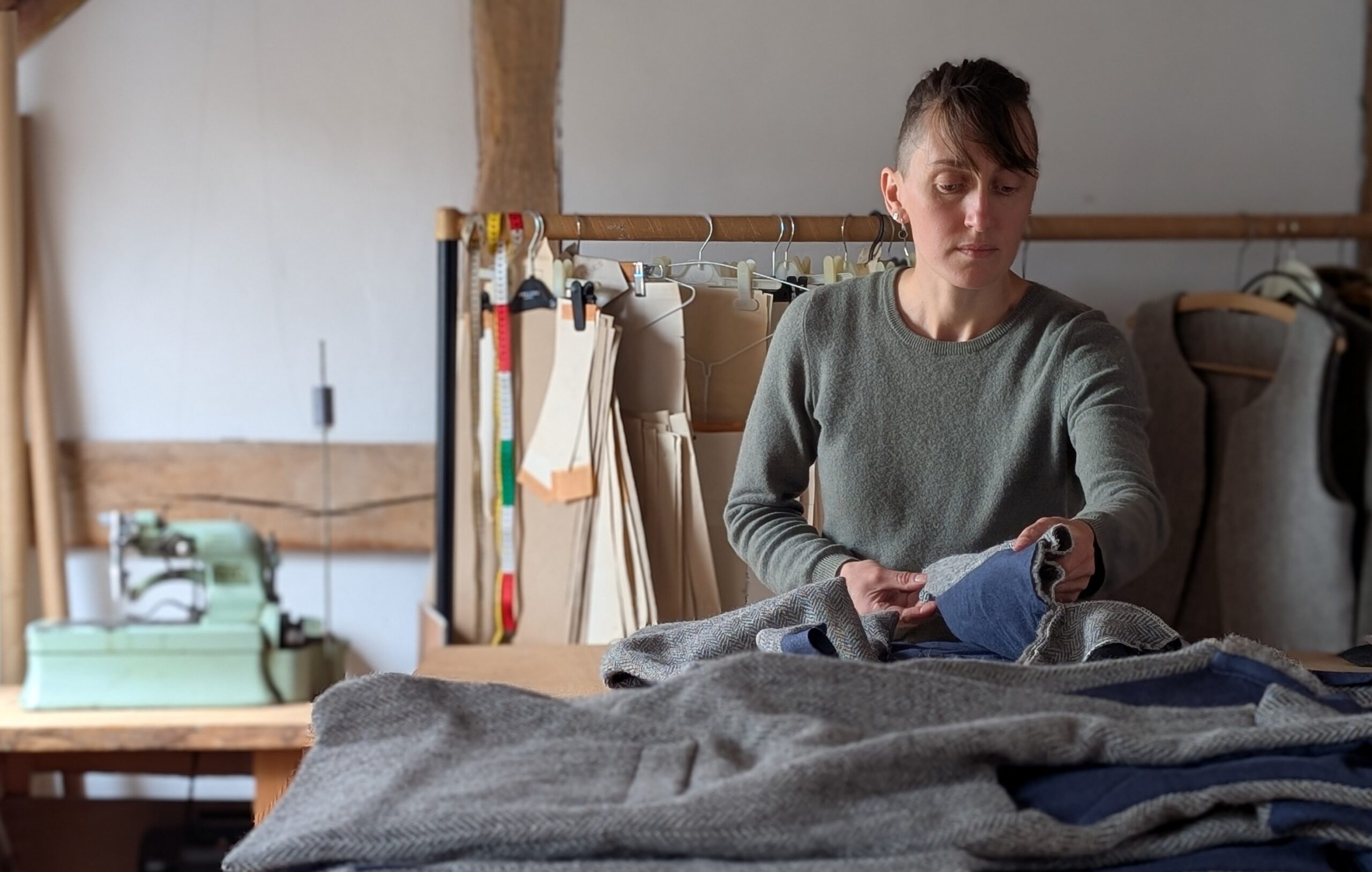
Today I’m talking to Emily James, the clothes maker behind Carpenter and Cloth. You’ll find her tucked into the hills behind Llandovery, in her studio where she designs and sews all the garments.
Alongside her partner Danny (the carpenter), Emily (the clothier) co-founded Carpenter & Cloth – a holistic brand using traditional techniques to create clothing and shelter from the materials of their mid-Wales landscape.
She was one of the very first people I connected with when I moved to Wales 13 years ago, and I’m really excited to share our conversation about how she sources her fabric and works with it to create her garments.
Can you tell us a little about Carpenter & Cloth, the philosophy behind the clothing, and your unique approach to sourcing cloth?
My work explores the concept of modern indigenous clothing, pursuing a visceral connection between clothing, culture and environment.
I use local woollen mills to process fleeces direct from the farm into limited runs of cloth with faultless traceability.
“By utilising the raw materials and local skills that still cling on in our community, I can create truly useful, cherished garments that hold great meaning through the stories they tell, prioritising the social and environmental impact my work has right from the beginning.”
What drew you to working specifically with Welsh wool?
We live in scary times, with increasingly overwhelming global issues that leave us feeling powerless. My coping strategy is to whittle away the chaos until I have got to a fundamental purpose that I can pin my practise on; food, clothing and shelter are fundamental human needs that, evolving from the various constraints and abundance of a particular climate and geography, form the foundations of culture.
My work is about connecting people to the
land in which we live, and the stories that unite us.
I have always taken comfort in a sense of belonging to the landscape I live in. The fibre that is produced and processed in these hills is a tangible connection to the land, the seasons and the story of our place within it. These things give meaning to my being here.
How do the relationships with Welsh fabric mills begin? And how does this collaboration shape your garment development process?
Firstly, you have to want to use what they want to make.
You have to understand and be able to work with unpredictable, fluctuating and often very long timescales.
You have to design from the bottom up, not work backwards from your ultimate awesome fashion plates. I actually love the process of meeting an absolutely beautiful cloth, engaging with its story and its characteristics, and then discovering what it really ought to be used for; what garment would make the very best of what this cloth has to offer?
So what is your process for commissioning fabric from weavers in Wales?
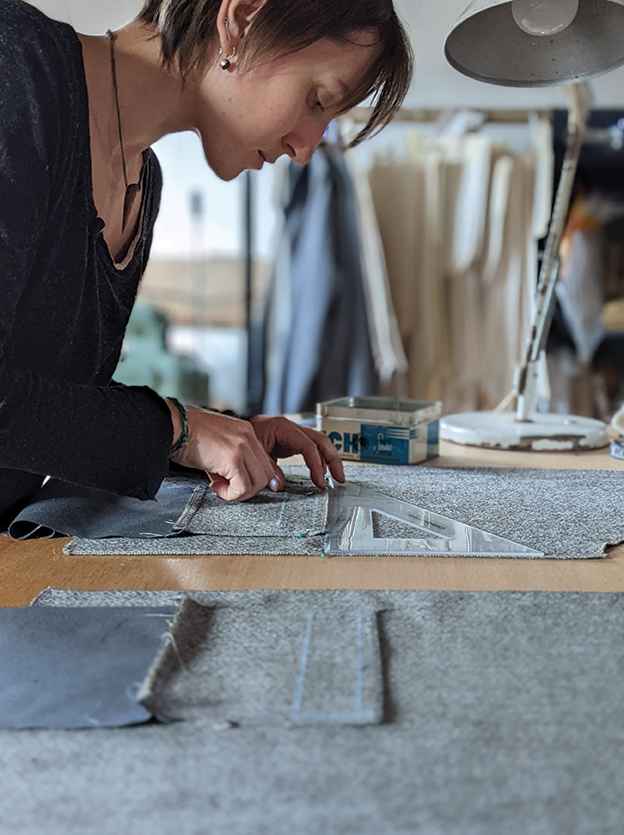
To commission a run of cloth, first you have to work out some numbers and then make some educated guesses! The mill works on a 50m standard run (which often comes out at nearer 60m). Once you have decided on the weight of cloth and basic design/weave structure you want, the weavers are able to advise you on the yarn requirements.
Of course I want to use my local wool and, amazingly, the mill are also able to spin the weaving yarns for me on site. I like to have 2 tones of yarns to contrast in the weave, so we work out what the values need to be and how that translates into percentages of dark and white fleeces to be blended.
So far I have always used a different breed of sheep for my white fleeces and it is fascinating to see how this affects the resulting cloth. There are a lot of people producing single breed knitting yarns and so it is possible to get a sense of how different qualities in a fleeces might affect the handle of a finished yarn, but very few people are producing specific breed cloth. This means that it always feels a bit like a leap into the unknown with fingers and toes crossed! I think this is one of the areas of knowledge that has rapidly disappeared with the upscaling of the textile industry and the amalgamation of all of the fleece ‘types’.
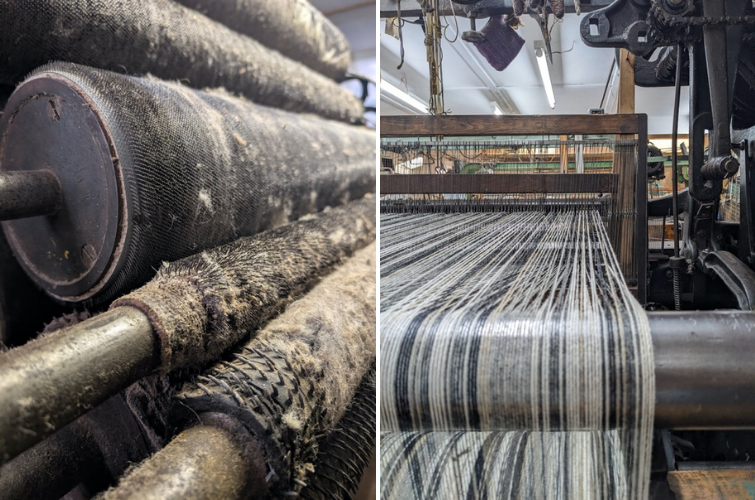
From shearing time to finally collecting the finished rolls of cloth there is a wait of around 15 months for my precious 50m. This is partly to do with scale and limited machinery, but also demand and skills deficit.
Industrial scouring plants operate at up to 1000 tonnes of wool per week, which is equivalent to 300,000 sheep fleeces. We have no scouring plant in Wales, and our small run of cloth uses about 30 fleeces, so, they have to be washed by hand. They are then carded and blended, spun and woven on nearing 100 year old looms into a run of beautiful cloth.
The biggest journey is then up to the Scottish Borders for finishing, where is it washed, brushed and pressed to meld the fibres together and make a hardwearing and insulative cloth.
What’s something you wish people understood better – or often get wrong – about fabric, wool, or small-scale clothing production?
I think the biggest lack of understanding has to be price disparage. There are so few hand made clothing brands, and such over-saturation of highly industrialised, mass produced clothing imports that people generally do not understand how long hand-making takes and how much more expensive materials are on a small scale. Factory production is simply a different beast.
Community Clothing have worked out that a pair of their jeans requires 182 minutes of work to get them to point of sale. That’s just 3 hours. It takes a minimum of 6 hours to make a Cambrian Gilet and the material costs alone are around £100.
I think in general many people have become very removed from processing and even handling natural materials. Many people believe that you can’t wash wool, but the reason a tailored jacket for example is “dry clean only” is usually due to the synthetic glued interfacings and stabilisers used to speed up construction.
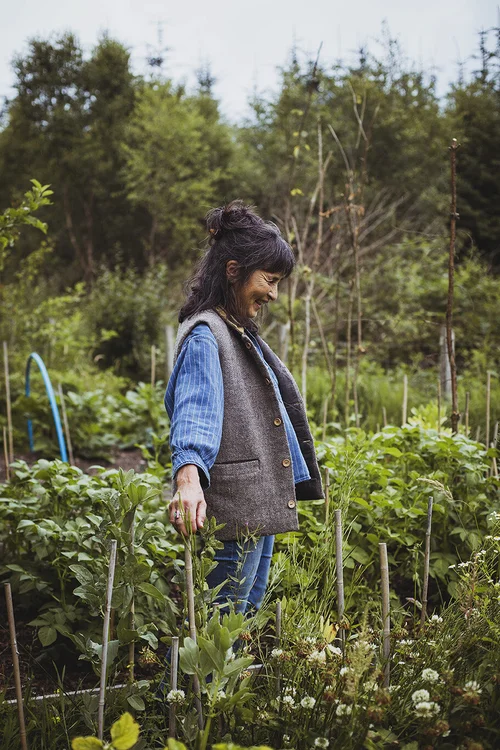
I am often asked about the reason farmers get so little for their fleeces – people struggle to understand why wool clothing seems expensive and yet the producer is making a loss. Firstly, the number of different processes that wool has to go through to become a finished garment is huge, and the percentage of a fleece that actually makes it through to being worn is pretty small – an entire fleece will provide enough cloth for only 2 [of my] gilets!
If wool pricing today was in medieval times…
In medieval times, when we didn’t import clothing and there were no synthetic alternatives, the wool trade represented a huge portion of Britains economy and sheep were bred primarily for their wool. By 1480, half a kilo of good fleece cost the same as an average day wage for a carpenter. Today, thats at least £200. Most people back then had to spin and knit their own woollens, and you’d need most of a kilo to knit a jumper, so you looking at about £400 just for the materials.
My run of 50-60m requires 60kg of raw fleece, dagged but unwashed, which will equate to about 35-40kg once scoured, carded and spun. In medieval times, this would amount to around £16,000. Including the processing (which is obviously more mechanised now than in medieval times!) this would make the finished tweed around £320/m.
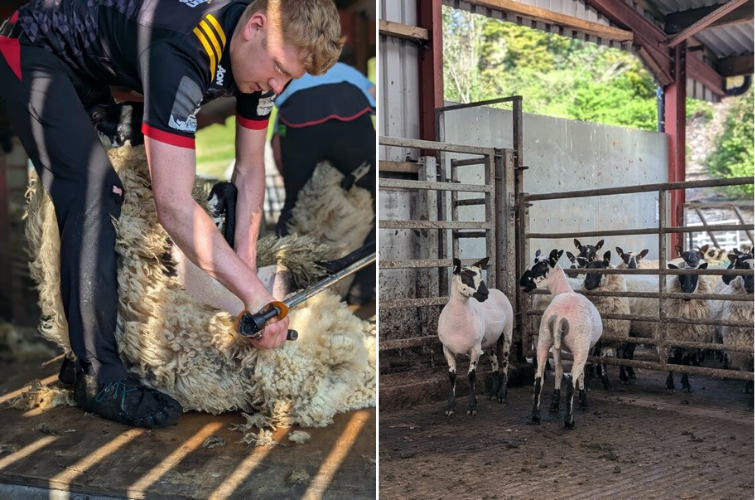
You can get an average of 2kg of good, washed wool from a sheep per year. If the current dead weight of a lamb (around £200) is representative of the cost of keeping a sheep for a year, you could assume that, if the sheep were bred solely for wool, you might get a fleece for £200 (and if this were the case, you could expect a much higher standard of fleece too). This is a quarter of the wool price in medieval times and would make a meter of finished tweed, so about £150.
In the year 1300 there were around 12 million sheep in Britain and a population of about 4.7 million. Today there are 30.5 million sheep in the UK and 60.9 million people. So, in terms of a sheep to people ratio, it’s not that different. If every sheep produced a good quality fleece (which they don’t) we’d technically be able to make a new waistcoat for every person every year. But of course, thats not the only use for wool. Wool is in demand, but the price is not set by the producers, it is set by the buyers. And the real reason that farmers don’t get enough money for their wool? It’s cheeper to import from countries with a lower GDP, but mostly, it was the invention of polyester.
What’s currently on your workbench or in progress?
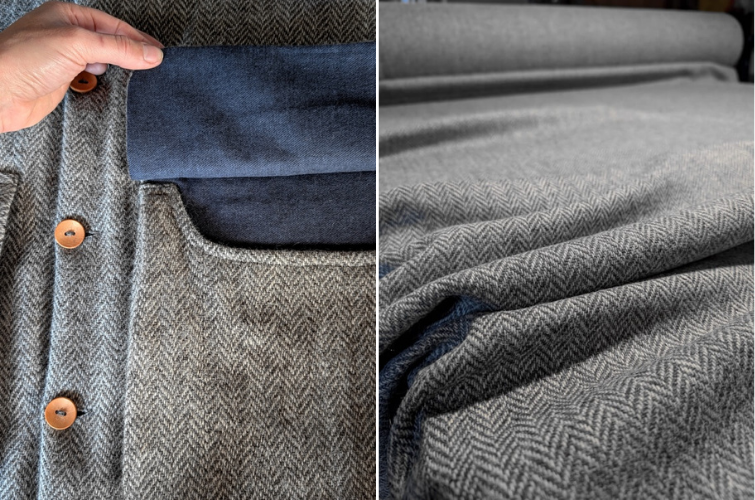
I have just finished a bespoke gilet with some very generous ‘bellows’ type pockets, which was a really fun experiment – and turned out very nicely – but now, I’m making stock! I have a show at the end of May, at The Castle in Hay on Wye during the Hay Literary Festival, so I need some garments to sell!
I have been working for the last year on a really exciting cloth with Elvet Woollen Mill (run by Daniel Harris, London Cloth). The quality is going to be incredible, and the story is wonderful – but it sure is expensive! I am really really hoping to get some shirts finished in time for the show – I can’t wait to see what people think! I’ve already been using some beautiful British wool cloth from Daniel to create our Elvet Jacket, which was a new design that I launched last year.
I love working on new ideas, but I have realised that one new design per year is about all that I can manage whilst I am a one-woman-band. I have been dreaming of an additional, more fitted, semi-felted waistcoat, but I think the shirts might take that slot this year… Let’s see!
To keep up with Emily and what she’s up to you can follow Carpenter & Cloth on Instagram here.
Visit her stand at Hay on Wye Literary Festival.
She is also expected back at the brillant Craft Festival in Cardigan.
And check out Elvet Woollen Mill which is just down the road from us!

